How Workplace Hygiene Supports Business Growth and Employee Wellbeing
Maintaining a clean workplace is no longer just about appearance—it has become an essential part of running a successful business. Whether you operate an office, warehouse, retail store, school, medical centre, or commercial facility, workplace hygiene directly influences employee health, productivity, customer confidence, and overall business performance.
Modern businesses recognise that cleanliness is an investment rather than an expense. A hygienic environment helps reduce the spread of illnesses, creates a professional image, and allows employees to work in a safe and comfortable space.
Many organisations focus only on cleaning when something becomes visibly dirty. However, effective workplace hygiene is built on consistent cleaning schedules, proper sanitisation procedures, and preventive maintenance that keeps the workplace healthy every day.
For businesses looking for Reliable Office Cleaning Perth services, understanding the importance of workplace hygiene helps explain why professional cleaning plays such an important role in long-term business success.
This guide explores how workplace hygiene supports business growth, improves employee wellbeing, and creates a positive experience for both staff and customers.
Table of Contents
ToggleWhat Is Workplace Hygiene?
Workplace hygiene refers to the practices used to keep commercial environments clean, safe, and healthy for everyone who enters the premises.
It involves much more than basic cleaning.
A comprehensive workplace hygiene program includes:
- Regular cleaning
- Surface sanitisation
- Washroom hygiene
- Waste management
- Air quality improvement
- Kitchen cleaning
- Carpet maintenance
- High-touch point disinfection
- Floor care
- Deep cleaning schedules
These practices work together to minimise health risks while maintaining a professional working environment.
Why Workplace Hygiene Matters More Than Ever
Today’s workplaces experience constant movement of employees, customers, contractors, suppliers, and visitors.
Every day, hundreds of people touch:
- Door handles
- Reception desks
- Lift buttons
- Shared keyboards
- Meeting tables
- Kitchen appliances
- Coffee machines
- Handrails
- Light switches
Without proper hygiene practices, these surfaces can become breeding grounds for bacteria and viruses.
Consistent workplace cleaning helps minimise these risks while creating a healthier environment for everyone.
The Connection Between Hygiene and Business Success
Many business owners underestimate the impact cleanliness has on overall performance.
A well-maintained workplace contributes to:
- Better employee morale
- Improved productivity
- Reduced absenteeism
- Higher customer confidence
- Stronger company reputation
- Longer-lasting workplace assets
- Safer working conditions
Professional cleaning supports each of these outcomes by ensuring the workplace remains clean, organised, and hygienic throughout the year.
Healthier Employees Lead to Better Performance
Employees spend a significant portion of their day inside the workplace.
Dust, allergens, bacteria, and poor indoor air quality can negatively affect their health and comfort.
Professional workplace hygiene helps reduce:
- Dust accumulation
- Allergens
- Germ transmission
- Cross-contamination
- Unpleasant odours
A healthier workplace contributes to:
- Higher concentration
- Better morale
- Improved attendance
- Greater job satisfaction
Healthy employees are generally more engaged and productive.
Reducing Workplace Illness
Shared work environments make it easy for illnesses to spread.
High-touch surfaces should be cleaned regularly, including:
- Door handles
- Light switches
- Lift controls
- Shared desks
- Telephones
- Computer keyboards
- Reception counters
Routine sanitisation helps reduce the spread of seasonal illnesses while supporting overall workplace wellbeing.
Creating a Positive First Impression
Customers often form opinions about a business within moments of entering the premises.
Clean workplaces communicate professionalism and attention to detail.
Visitors immediately notice:
- Clean reception areas
- Fresh-smelling offices
- Spotless floors
- Sanitised washrooms
- Organised meeting rooms
- Dust-free furniture
A clean environment builds confidence and reflects positively on the business.
Workplace Hygiene Builds Employee Confidence
Employees appreciate organisations that prioritise their health and wellbeing.
A consistently clean workplace demonstrates that management values:
- Staff wellbeing
- Workplace safety
- Professional standards
- Employee comfort
This contributes to a stronger workplace culture and higher levels of employee satisfaction.
Improving Indoor Air Quality
Indoor air quality has become an increasingly important part of workplace health.
Dust, pollen, mould spores, and airborne particles can affect employee comfort and productivity.
Professional cleaning helps improve air quality by:
- Vacuuming carpets using HEPA filtration
- Removing dust from workstations
- Cleaning air vents
- Reducing allergens
- Maintaining clean upholstery
- Removing accumulated dirt from hard-to-reach areas
Cleaner air creates a more comfortable working environment while reducing respiratory irritation.
Workplace Hygiene Protects Business Assets
Commercial properties contain valuable assets that require regular maintenance.
These include:
- Carpets
- Timber flooring
- Vinyl flooring
- Office furniture
- Glass partitions
- Reception counters
- Kitchen facilities
- Washrooms
Routine cleaning extends the lifespan of these assets while reducing long-term repair and replacement costs.
Hygiene Supports Business Reputation
Clean workplaces contribute directly to brand perception.
Customers naturally associate clean premises with:
- Professionalism
- Reliability
- Attention to detail
- Quality service
- Trustworthiness
Regardless of industry, maintaining excellent hygiene standards strengthens customer confidence and encourages repeat business.
Workplace Hygiene Best Practices Every Business Should Follow
Creating a healthy workplace requires more than occasional cleaning. Businesses that consistently maintain high hygiene standards usually follow structured cleaning routines that cover every area of their premises.
Professional workplace hygiene should focus on prevention rather than reacting only when problems become visible.
Some of the most effective hygiene practices include:
- Daily cleaning of workstations
- Regular sanitisation of high-touch surfaces
- Washroom hygiene management
- Kitchen cleaning
- Waste disposal
- Carpet maintenance
- Floor cleaning
- Indoor air quality improvement
- Scheduled deep cleaning
When these practices become part of a regular maintenance schedule, businesses experience cleaner environments and healthier employees throughout the year.
Establish a Daily Workplace Hygiene Routine
Daily cleaning forms the foundation of an effective workplace hygiene program.
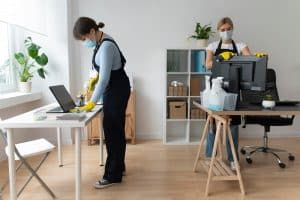
Professional cleaners typically focus on areas that employees and visitors use most frequently.
Reception Areas
The reception area represents your business and should always remain clean.
Daily tasks include:
- Vacuum entrance mats
- Mop hard floors
- Dust reception desks
- Clean glass entry doors
- Empty rubbish bins
- Sanitize visitor seating
- Remove fingerprints from glass
A clean reception creates an immediate positive impression.
Employee Workstations
Desks and shared workspaces collect dust, bacteria, fingerprints and food particles throughout the day.
Daily cleaning should include:
- Wiping desk surfaces
- Emptying bins
- Vacuuming surrounding floors
- Cleaning shared office equipment
- Dust removal
- Sanitising frequently touched surfaces
Employees spend many hours at their desks, making workstation hygiene particularly important.
Shared Kitchens
Office kitchens experience constant use.
Professional cleaning should include:
- Sanitising benches
- Cleaning sinks
- Wiping cupboards
- Cleaning microwave surfaces
- Disinfecting refrigerator handles
- Cleaning dining tables
- Emptying rubbish bins
- Floor mopping
Maintaining kitchen hygiene reduces bacterial growth and creates a healthier environment for staff.
Washrooms
Washrooms require the highest cleaning standards in any commercial building.
Daily cleaning normally includes:
- Toilet sanitisation
- Basin cleaning
- Mirror polishing
- Tap disinfection
- Floor mopping
- Soap refilling
- Paper replenishment
- Bin emptying
- Odour control
Clean washrooms significantly improve workplace hygiene and visitor satisfaction.
High-Touch Surfaces Need Special Attention
Some surfaces are touched hundreds of times each day.
These include:
- Door handles
- Lift buttons
- Handrails
- Light switches
- Coffee machines
- Shared keyboards
- Telephones
- Meeting room tables
- Printer controls
Routine sanitisation of these areas helps reduce the spread of bacteria and viruses throughout the workplace.
Weekly Hygiene Maintenance
Weekly cleaning allows businesses to address areas that do not require daily attention but still contribute to overall workplace cleanliness.
Typical weekly tasks include:
- Interior glass cleaning
- Upholstery vacuuming
- Furniture dusting
- Air vent cleaning
- Kitchen appliance cleaning
- Detailed workstation cleaning
- Spot carpet treatment
- Skirting board cleaning
These services prevent gradual dirt build-up while improving workplace presentation.
Monthly Deep Cleaning
Some cleaning tasks require specialised equipment and additional time.
Monthly maintenance often includes:
Carpet Cleaning
Commercial carpets trap:
- Dust
- Allergens
- Dirt
- Bacteria
- Moisture
Professional carpet maintenance helps improve indoor air quality while extending carpet life.
Hard Floor Maintenance
Depending on flooring type, monthly maintenance may include:
- Machine scrubbing
- Floor polishing
- Burnishing
- Protective coating
- Deep grout cleaning
Maintaining commercial flooring improves appearance while reducing replacement costs.
High-Level Dust Removal
Dust often accumulates in difficult-to-reach areas including:
- Ceiling beams
- Air-conditioning vents
- High shelving
- Light fittings
- Warehouse rafters
Removing accumulated dust contributes to healthier indoor air.
Industry-Specific Workplace Hygiene Requirements
Different industries require different cleaning standards.
Corporate Offices
Office hygiene focuses on:
- Workstations
- Meeting rooms
- Reception
- Kitchens
- Washrooms
- Shared equipment
Routine cleaning helps maintain productivity and employee wellbeing.
Medical Centres
Healthcare facilities require enhanced infection prevention.
Cleaning priorities include:
- Treatment rooms
- Waiting areas
- Medical equipment surfaces
- Consultation rooms
- Staff facilities
These environments require strict sanitisation procedures.
Educational Facilities
Schools experience continuous foot traffic throughout the day.
Cleaning should cover:
- Classrooms
- Libraries
- Hallways
- Cafeterias
- Toilets
- Computer rooms
- Staff rooms
Maintaining hygiene helps reduce the spread of illness among students and staff.
Warehouses
Warehouses often generate large amounts of dust and debris.
Cleaning typically includes:
- Floor scrubbing
- Dust control
- Storage area cleaning
- Loading dock maintenance
- Lunch room cleaning
- Washroom sanitisation
Regular cleaning also contributes to workplace safety.
Retail Stores
Retail businesses rely heavily on presentation.
Priority cleaning areas include:
- Shop floors
- Display shelves
- Change rooms
- Customer counters
- Entrance glass
- Staff facilities
Clean retail environments encourage customer confidence.
Fitness Centres
Gyms contain numerous shared surfaces.
Cleaning should prioritise:
- Exercise equipment
- Locker rooms
- Mirrors
- Reception
- Showers
- Group fitness areas
Frequent sanitisation supports member health.
Common Workplace Hygiene Mistakes
Many businesses unknowingly reduce hygiene standards through avoidable mistakes.
Examples include:
- Skipping deep cleaning
- Ignoring high-touch surfaces
- Using incorrect cleaning chemicals
- Emptying bins too infrequently
- Neglecting carpet maintenance
- Poor washroom hygiene
- Inadequate ventilation
- Delaying maintenance issues
Addressing these problems early helps maintain a healthier working environment.
Employee Hygiene Plays an Important Role
Professional cleaning alone cannot maintain workplace hygiene.
Employees should also contribute by:
- Keeping desks organised
- Washing hands regularly
- Cleaning up food spills
- Using shared kitchens responsibly
- Reporting maintenance issues
- Disposing of waste correctly
When both cleaning professionals and employees work together, hygiene standards improve significantly.
Sustainable Workplace Hygiene
Businesses increasingly adopt environmentally responsible cleaning practices.
Common sustainability initiatives include:
- Biodegradable cleaning products
- Microfibre cleaning systems
- Water-efficient equipment
- Reduced plastic waste
- Energy-efficient machinery
- Refillable chemical containers
These practices support both workplace health and environmental responsibility.
Technology Is Improving Workplace Hygiene
Modern cleaning companies use advanced technology to improve efficiency and consistency.
Examples include:
- Digital quality inspections
- Electronic cleaning reports
- Smart scheduling software
- HEPA filtration vacuums
- Automated floor scrubbers
- Colour-coded cleaning systems
These innovations help deliver consistently high cleaning standards while improving accountability.