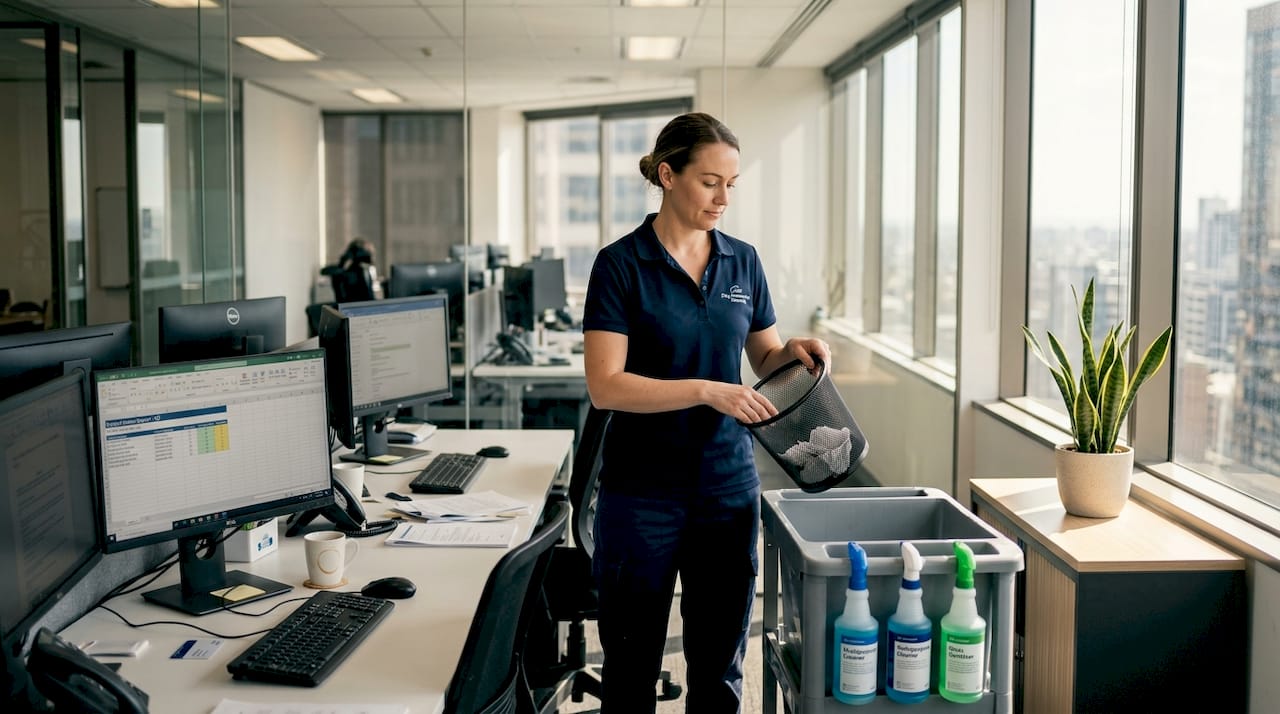
Inconsistent cleaning is one of the most quietly damaging problems in any Perth commercial space. Staff call in sick more often, productivity drops, and clients notice the mess before they notice your work. Research consistently links dirty shared environments to higher absenteeism and lower morale. Yet most facility managers and business owners are working without a structured daily plan, relying on ad hoc efforts that leave critical areas untouched. This guide walks you through a practical, repeatable cleaning workflow designed specifically for commercial spaces in Perth, covering tools, task sequencing, high-risk zones, and outcome verification.
Key Takeaways
| Point | Details |
|---|---|
| Tools matter most | Having the right supplies and organised storage makes daily cleaning faster and safer. |
| Clear workflow boosts hygiene | Structured step-by-step routines prevent missed tasks and support workplace health. |
| Focus on touchpoints | Prioritising high-touch and sensitive areas reduces illness risk and enhances compliance. |
| Documentation ensures standards | Consistent logs and inspections guarantee cleaning quality and accountability. |
| Adaptability wins | Flexible routines based on staff feedback encourage lasting hygiene improvement. |
Essential tools and cleaning supplies for daily office maintenance
Having established why structure matters, let’s start by ensuring your cleaning toolkit is ready. Proper equipment is the foundation of effective office cleaning, and gaps in your supply kit are the fastest way to create gaps in your hygiene outcomes.
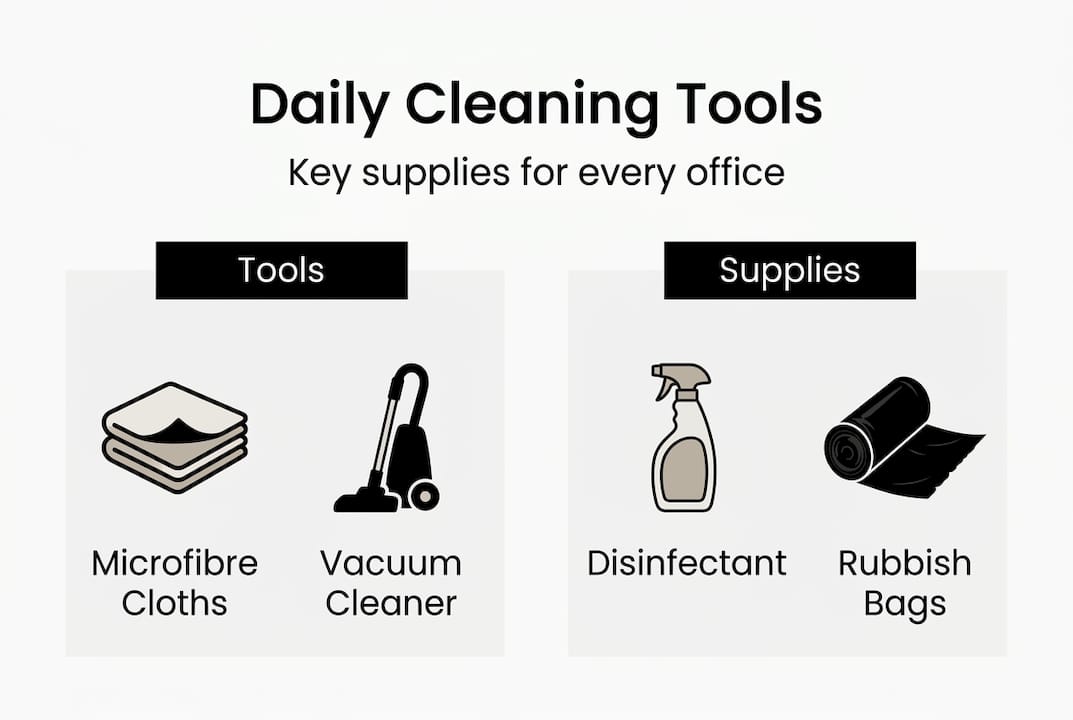
Your daily toolkit should include the following core items:
- Microfibre cloths (minimum 10 per session, separated by zone)
- Hospital-grade disinfectant spray for surfaces and touchpoints
- Vacuum cleaner with HEPA filtration for carpets and hard floors
- Mop and bucket with a clean-rinse mechanism
- Disposable gloves and face masks for bathroom and kitchen work
- Rubbish bags in multiple sizes for desk bins and communal waste
- Glass cleaner for partitions, windows, and screens
- Hand sanitiser refills for dispensers throughout the office
Below is a quick reference for how often each supply category needs restocking:
| Supply category | Replenishment frequency |
|---|---|
| Microfibre cloths (clean stock) | Daily |
| Disinfectant spray | Weekly or as needed |
| Rubbish bags | Daily |
| Hand sanitiser refills | Every 2 to 3 days |
| Mop heads | Weekly |
| Gloves and masks | Daily |
Storage matters just as much as having the right supplies. Keep cleaning products in a locked, ventilated cupboard away from food preparation areas. Label everything clearly and rotate stock using a first-in, first-out system to avoid expired products sitting at the back of the shelf.
Pro Tip: Use colour-coded microfibre cloths for different zones. For example, red for bathrooms, blue for kitchens, and green for general office surfaces. This simple system prevents cross-contamination and is one of the most effective cleaning tips for better building maintenance you can implement today.
Structuring your daily office cleaning workflow
With tools and materials ready, it’s time to design your cleaning workflow for maximum efficiency. Structured routines reduce missed tasks and improve hygiene outcomes across the board. The key is sequencing tasks so you move from less contaminated areas to higher-risk zones, and from top to bottom within each space.
Here is a proven daily sequence for a standard commercial office:
- Empty all bins at desks and communal areas before any surface work begins
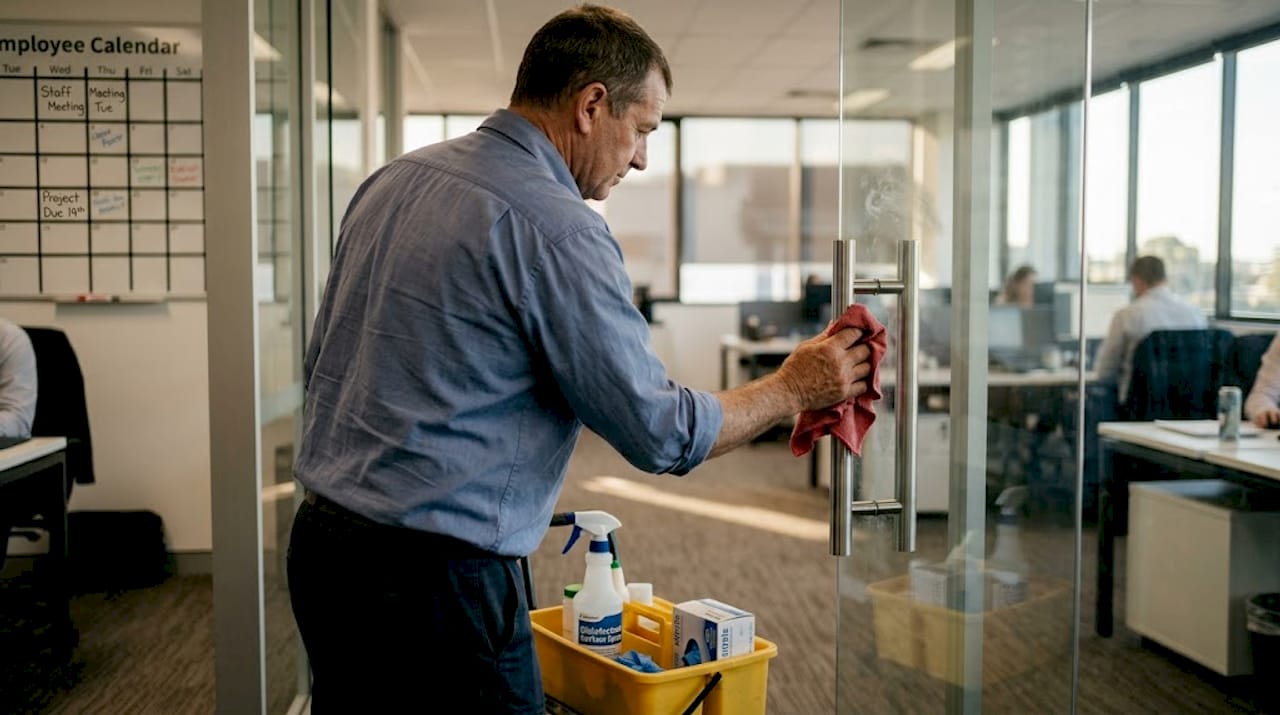
- Disinfect reception and entry surfaces including counters, door handles, and sign-in tablets
- Restock consumables such as hand sanitiser, paper towels, and soap dispensers
- Wipe down all desk surfaces in open-plan areas using disinfectant spray and microfibre cloths
- Clean and sanitise kitchenettes including benchtops, sink, microwave exterior, and fridge handles
- Service all bathrooms including toilet seats, taps, mirrors, and floors
- Conduct a midday spot check of high-traffic areas including bathrooms and kitchens
- Vacuum all carpeted areas and sweep hard floors before the end of business
- Mop hard floor surfaces using a clean solution
- Final sanitisation of touchpoints including lift buttons, light switches, and printer controls
This sequence ensures that the most contaminated spaces that need attention are addressed both at the start and end of the day.
| Task | Principal (daily) | Optional (as needed) |
|---|---|---|
| Bin emptying | ✓ | |
| Surface disinfection | ✓ | |
| Bathroom servicing | ✓ | |
| Window cleaning | ✓ | |
| Deep carpet clean | ✓ | |
| Consumable restock | ✓ | |
| Touchpoint sanitisation | ✓ |
Pro Tip: Assign named staff members to specific zones rather than rotating everyone through every area. Accountability improves dramatically when one person owns a space, and you’ll find that issues get flagged faster when someone feels responsible for a particular area.
Key focus areas: High-touch and sensitive spaces
After establishing the flow, focusing your attention on the right spaces ensures maximal impact. Not all surfaces carry equal risk. The ones touched repeatedly throughout the day by multiple people are where pathogens accumulate fastest.
Neglecting high-touch surfaces increases the risk of illness spread significantly. Studies have found that a single contaminated surface can transfer bacteria to more than 50% of workers and visitors within four hours.
Your daily touchpoint checklist should cover:
- Door handles and push plates (entry, exit, bathroom, kitchen)
- Lift buttons and stairwell railings
- Printer and photocopier controls
- Kitchen appliance handles (microwave, fridge, kettle, coffee machine)
- Meeting room chairs, tables, and AV remote controls
- Reception counters and sign-in screens
- Light switches throughout the office
- Bathroom taps, flush buttons, and hand dryer buttons
Sensitive spaces deserve extra care. Meeting rooms accumulate germs from rotating groups of people and often go unchecked between sessions. Entryways collect outdoor contaminants on shoes and hands. Bathrooms are the highest-risk zone in any commercial building.
“The areas most people walk past without a second thought, like light switches, chair armrests, and shared keyboards, are often the most contaminated surfaces in an office. Overlooking them is not a minor oversight. It’s a genuine health risk.”
For spaces where enhancing indoor air quality is a concern, pay attention to air vents, blinds, and soft furnishings that trap dust and allergens. These are often missed in daily routines but contribute significantly to respiratory complaints over time.
The goal is not just visual cleanliness. It’s a hygienic environment that actively reduces sick days and supports staff wellbeing.
Verifying and documenting cleaning outcomes
Once your workflow is in place, verifying outcomes keeps standards high and staff motivated. A cleaning routine without verification is just a list of intentions. Regular monitoring and feedback help catch issues before they escalate into complaints or compliance failures.
Supervisors should conduct a structured inspection at least once per day. Here’s what to check:
- Are all bins empty and relined?
- Are bathroom consumables stocked and surfaces clean?
- Are high-touch points visibly clean and free of residue?
- Are floors vacuumed or mopped with no visible debris?
- Are kitchen surfaces sanitised and free of food residue?
- Are cleaning logs signed off and up to date?
A simple daily log captures who cleaned what, when, and with which products. Weekly logs allow you to spot patterns, such as a particular area consistently being missed. Monthly reviews give you the data to adjust rosters, supplies, or task assignments.
Encourage staff to report cleaning concerns without hesitation. A quick note to the facilities team about a spill or a restroom issue is far more valuable than silence followed by a complaint from a client.
Pro Tip: Digital checklists on a shared tablet or app make it easy to confirm task completion in real time. They also create an automatic audit trail, which is invaluable if you ever need to demonstrate compliance with workplace health standards. This is one of the most practical ways to support maximising workplace productivity through better cleaning management.
For teams looking to take this further, exploring how enhancing workplace productivity connects to cleaning consistency is well worth the time.
Why rigid cleaning routines can hinder real results
Here’s something most cleaning guides won’t tell you: a perfectly written checklist can actually make your cleaning outcomes worse. When staff follow a rigid script without thinking critically about what they’re seeing, they tick boxes rather than solve problems. A spill near the printer gets ignored because it’s not on today’s list. A bathroom running low on supplies at 11am doesn’t get restocked until the scheduled afternoon round.
The most effective cleaning programmes we’ve seen in Perth workplaces are built on structured foundations but leave room for real-time judgement. Train your team to respond to what they observe, not just what the schedule says. Encourage them to flag issues immediately rather than waiting for the next assigned task window.
Staff engagement is the real multiplier here. When cleaners feel ownership over their zones and are empowered to act, outcomes improve far beyond what any checklist can guarantee. The benefits of hiring professional office cleaners include exactly this kind of trained, adaptive judgement that’s difficult to replicate with untrained internal staff alone.
Next steps: Boost your office hygiene with expert help
A structured daily workflow gives you a strong foundation, but maintaining it consistently across a busy commercial space takes trained hands and professional-grade equipment. That’s where Sparkle Commercial Cleaning comes in. ✨
Our well-trained team services commercial spaces across Perth with the expertise and equipment to keep your office hygienic, compliant, and looking its best every single day. Whether you need commercial cleaning in Belmont, office cleaning in Como, or specialised medical cleaning services Perth, we have the local knowledge and proven systems to deliver results you can see. Ready to take the stress out of daily office hygiene? Get in touch with Sparkle today.
Frequently asked questions
How often should high-touch surfaces be cleaned in an office?
High-touch surfaces should be cleaned at least twice daily, with additional attention during flu season, to reduce the risk of illness spread. Neglecting these surfaces is one of the most common causes of preventable illness in shared workplaces.
What’s the best way to track daily cleaning tasks?
A digital checklist or logbook makes it easy to track tasks and confirm completion for consistent results. Regular monitoring and feedback ensure issues are caught early rather than after they’ve become problems.
Which cleaning supplies are essential for daily office maintenance?
Microfibre cloths, disinfectants, a mop, vacuum cleaner, gloves, and rubbish bags are the core supplies needed every day. Proper equipment is what separates a thorough clean from a surface-level tidy.
How can businesses ensure their cleaning routines comply with health standards?
Review cleaning protocols regularly and document all tasks using signed checklists to maintain health compliance and clear accountability. Structured routines reduce the likelihood of missed tasks that could lead to compliance issues.