Running a gym in Perth means juggling member expectations, equipment maintenance, and hygiene standards all at once. Cleaning is one of those areas where gym owners and managers tend to have a lot of questions, especially around how often things should be done, what products are safe to use around equipment and people, and what a professional cleaning service actually includes.
This FAQ pulls together the questions we hear most often from gym owners, studio managers, and facility operators across Perth. Whether you run a boutique studio, a 24-hour gym, or a multi-site fitness chain, these answers should help you make more informed decisions about your cleaning program.
Cleaning Frequency and Hygiene Standards
How often should a gym be professionally cleaned?
Most Perth gyms benefit from daily cleaning of high-touch areas, with a more thorough deep clean scheduled weekly or fortnightly depending on member traffic. A 24-hour gym with continuous foot traffic will generally need more frequent attention than a smaller studio with scheduled class times only.
As a general guide:
- Daily: equipment wipe-downs, floors, mirrors, bins, toilets, and change rooms
- Weekly: deep cleaning of mats, upholstery, air vents, and hard-to-reach areas
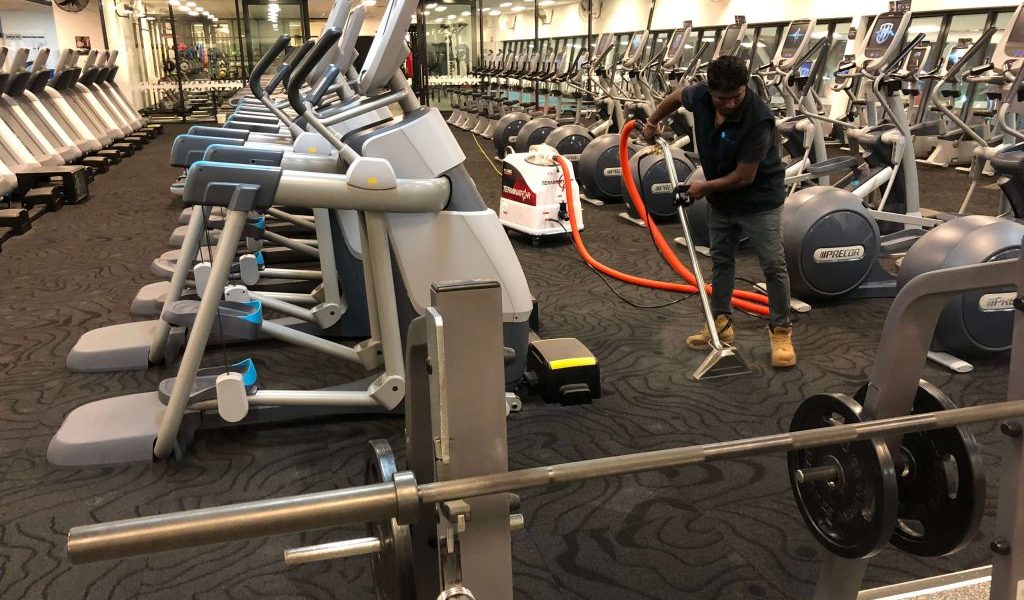
- Monthly or quarterly: carpet extraction, window cleaning, and equipment detailing
The right frequency ultimately depends on your member numbers, class schedule, and the type of equipment you run. A high-intensity functional training space with shared floor mats will usually need more attention than a space dominated by cardio machines.
What areas of a gym need the most attention?
Sweat, moisture, and shared surfaces are the biggest hygiene concerns in any fitness facility. The areas that typically need the most consistent cleaning include:
- Cardio equipment handles, consoles, and seats
- Free weights, dumbbells, and resistance machine grips
- Yoga mats, benches, and shared floor space
- Locker rooms, showers, and toilets
- Reception desks and touchscreens
These are the surfaces members interact with most, so they carry the highest risk of bacteria and odour build-up if left unattended.
Is gym hygiene compliance a legal requirement in Western Australia?
Gyms in Perth are expected to maintain a reasonably clean and safe environment under general workplace health and safety obligations, along with any specific requirements tied to public health guidance. While there isn’t a single dedicated “gym cleaning law,” facility operators still carry a duty of care to members and staff. This means having a documented cleaning routine, appropriate signage, and evidence that hygiene practices are being followed consistently is a sensible and often expected standard of operation.
If your gym operates within a shared building, business park, or leased premises, it’s also worth checking whether your lease or body corporate rules specify any additional cleaning obligations.
Are gym cleaning products safe to use around equipment and members?
This is one of the most common concerns we hear. Not all cleaning products are suitable for gym environments. Harsh chemicals can damage rubber flooring, vinyl upholstery, and electronic equipment consoles, while some disinfectants need proper dilution and contact time to be effective without leaving residue.
A professional gym cleaning provider should be using products that are:
- Effective against common bacteria and viruses without being corrosive
- Safe for use on rubber, vinyl, chrome, and touchscreen surfaces
- Low-odour, since strong chemical smells can be off-putting in an enclosed training space
- Applied with the correct dilution ratios and dwell times to actually work
If you’re unsure what’s being used in your facility, it’s reasonable to ask your cleaning provider for product details and safety data sheets.
What’s Included in Professional Gym Cleaning Services
What does a typical gym cleaning service in Perth include?
Scope varies between providers, but most professional gym cleaning packages in Perth cover a combination of the following:
- Wipe-down and sanitising of cardio and strength equipment
- Floor cleaning, including mopping, vacuuming, and mat cleaning
- Restroom and shower cleaning, including restocking of consumables where agreed
- Mirror and glass cleaning
- Bin emptying and waste management
- Reception, common areas, and high-touch point disinfection
- Odour control treatments where needed
Additional services such as carpet steam cleaning, window cleaning, air duct attention, or upholstery treatment are usually offered as add-ons or scheduled periodically rather than as part of the daily service.
How is gym cleaning priced in Perth?
Pricing structures generally fall into one of a few models:
- Per visit or per hour: suited to smaller studios with lower traffic that don’t need daily service
- Fixed weekly or monthly contract: common for larger gyms with a defined daily or several-times-a-week schedule
- Scope-based quoting: pricing tied to the size of the facility, number of equipment pieces, and frequency required
Factors that typically influence the quote include the size of the facility, how many days per week cleaning is required, whether cleaning happens during operating hours or after close, and whether additional services like deep cleaning or consumable restocking are bundled in.
Because every gym layout and membership base is different, it’s worth getting a walkthrough quote rather than relying on a generic price list. A boutique studio with 100 members has very different needs to a large-format gym running classes from 5am to 10pm.
Should cleaning happen during opening hours or after close?
Both approaches are common in Perth, and the right choice depends on your operating model:
- After-hours cleaning suits gyms that close overnight, allowing a full deep clean without disrupting members.
- During-hours spot cleaning works well for 24-hour gyms or high-traffic periods, where staff or contracted cleaners wipe down equipment and touch points throughout the day between a scheduled deep clean.
Many gyms use a combination: a thorough clean overnight or early morning, supplemented by spot cleaning and restocking of sanitiser stations during peak hours.
Do gym cleaners bring their own equipment and supplies?
Most professional cleaning providers supply their own equipment, chemicals, and consumables as part of the service. This is worth confirming upfront, along with who is responsible for restocking items like hand towels, toilet paper, and sanitiser refills, since this can sometimes be treated as a separate line item.
Member-Facing Hygiene Policies
Professional cleaning handles the background work, but day-to-day hygiene in a gym also depends on member behaviour. A well-designed hygiene policy makes it easy for members to do the right thing without feeling like it’s a chore.
What are wipe-down stations and where should they go?
A wipe-down station is a designated point where members can access spray bottles, disinfectant wipes, or paper towel to clean equipment after use. For these stations to actually get used, placement matters more than most gyms realise.
Effective placement usually includes:
- At entry and exit points of the main training floor
- Near clusters of cardio equipment
- At the start and end of the free weights area
- Inside or just outside group training rooms
The goal is to make wiping down equipment the path of least resistance. If a member has to walk across the gym to find a spray bottle, the habit won’t stick.
What should gym hygiene signage actually say?
Signage works best when it’s short, specific, and placed at the point of action rather than generic posters on a back wall. Useful signage typically includes:
- A brief reminder to wipe down equipment after use, placed directly on or near machines
- Instructions for using sanitiser stations correctly
- General etiquette reminders, such as using a towel during floor work or class sessions
- Contact details for reporting equipment issues or hygiene concerns to staff
Signage tends to be more effective when it’s refreshed occasionally rather than left in place indefinitely. Members can become “blind” to permanent fixtures over time.
Where should sanitiser be placed for the best results?
Sanitiser stations should be positioned at natural decision points: gym entrances, exits, near reception, at the entry to change rooms, and beside water fountains. Placing sanitiser at these transition points means members encounter it as part of their normal movement through the facility, rather than having to seek it out.
Should gyms have a written hygiene policy for members?
A simple, written hygiene policy is a useful tool even if it’s only a short section in your membership agreement or house rules. It sets clear expectations around:
- Wiping down equipment after use
- Bringing a towel to sessions
- Appropriate footwear on the training floor
- Reporting spills, equipment issues, or hygiene concerns to staff
Having this documented also supports your broader hygiene compliance efforts, since it shows a consistent, communicated standard rather than an assumed one.
How can gyms encourage better hygiene habits without annoying members?
Consistency and convenience are more effective than strict enforcement. Gyms that see the best member compliance tend to:
- Make wipe-down supplies genuinely easy to find and well stocked
- Have staff model the behaviour themselves
- Keep signage brief and positioned where it’s actually relevant
- Address issues quietly and directly rather than through blanket announcements
Final Thoughts
Good gym hygiene in Perth comes down to a combination of a reliable cleaning schedule, appropriately chosen products, clear pricing expectations with your service provider, and sensible member-facing policies that make hygiene easy rather than optional. If you’re reviewing your current setup, start by mapping out your highest-traffic areas and checking whether your current cleaning frequency and product choices genuinely match the demands of your facility.