If you manage a gym, work in fitness facility operations, or simply want to understand why some clubs feel cleaner than others, it helps to know exactly what these surfaces are, why they matter, and how often they actually need attention.
What Counts as a High-Touch Surface in a Gym?
A high-touch surface is any point of contact that gets handled repeatedly, by different people, throughout the day. In a fitness environment, that list is longer than most people expect. It’s not just the obvious equipment handles, it’s every shared surface that hands, sweat, and skin come into contact with between cleans.
Free Weights and Strength Equipment
- Barbells, dumbbells, and kettlebells
- Weight plates and collars
- Bench surfaces and adjustable seat pads
- Squat rack handles and safety pins
Cardio and Machine Equipment
- Treadmill consoles, handrails, and start/stop buttons
- Cable machine handles and grip attachments
- Rowing machine handles and seat rails
- Exercise bike handlebars and seats
Shared Facility Points
- Locker doors, handles, and combination dials
- Door handles and push plates
- Reception counters and check-in tablets
- Water fountain buttons and bottle filling stations
- Bathroom and shower fixtures
Essentially, if a surface is touched, gripped, or leaned on by multiple people within an hour, it belongs on the high-touch list. This is different to floors, walls, or ceilings, which are cleaned regularly but don’t carry the same person-to-person contact risk.
Why High-Touch Zones Carry Greater Transmission Risk in Shared Gym Spaces
Gyms bring together a unique combination of factors that make high-touch surfaces a genuine hygiene concern, more so than in many other public spaces.
Sweat and Skin Contact
Exercise raises body temperature and increases sweat production. Sweaty hands gripping a barbell or machine handle transfer moisture, oils, and skin cells directly onto the surface. The next person to use that equipment picks up whatever was left behind, often within minutes.
High Frequency of Use
A popular piece of equipment in a busy Perth gym might be used by dozens of people across a single day, particularly during peak morning and evening sessions. Unlike a desk or a household surface that might be touched by the same one or two people repeatedly, gym equipment sees a constant rotation of different users, each bringing their own bacteria and germs into contact with the same spot.
Warm, Humid Conditions
Fitness facilities are often warmer and more humid than typical indoor environments, especially in areas near cardio equipment, saunas, or group fitness studios. These conditions can allow bacteria and germs to persist on surfaces for longer than they would in a dry, cool environment.
Shared Amenities Compound the Risk
It’s not only the equipment. Locker rooms, showers, and reception areas add more touchpoints to the mix. In a shared gym setting, members move between weights, cardio, amenities, and communal areas in a single visit, spreading contact across multiple surfaces each session.
Put together, these factors mean high-touch surfaces in a gym setting need a different, more frequent approach to cleaning than surfaces in a typical office or retail space.
Recommended Disinfection Frequency and Methods for High-Touch Gym Surfaces
Effective gym cleaning isn’t just about how often a surface is wiped, it’s about using the right method, the right product, and the right frequency for the level of contact each area receives.
How Often Should High-Touch Surfaces Be Cleaned?
As a general guide for a busy fitness environment:
- Throughout the day: Equipment handles, machine grips, and console buttons should be wiped down between heavy use periods, and members should be encouraged to wipe equipment after each use.
- Multiple times daily: Locker handles, door handles, reception counters, and water station buttons benefit from scheduled disinfection several times across opening hours, not just once at close.
- At least once daily, thoroughly: A full disinfection pass across all high-touch points should happen at least once every day, ideally during a quieter period or after closing, so surfaces start each trading day properly cleaned.
- Deeper clean on a set schedule: Locker rooms, showers, and bathroom fixtures typically need a more thorough clean on a set roster, in addition to the spot cleaning that happens throughout the day.
The exact frequency will depend on how busy the facility is and how many hours it operates. A 24-hour gym with continuous foot traffic needs a different rhythm to a boutique studio with set class times.
What Methods Work Best for Gym Surfaces?
- Disinfectant wipes or spray-and-wipe systems are practical for quick turnarounds between uses on equipment handles and consoles.
- Hospital-grade or commercial-grade disinfectants are better suited to thorough daily cleans, particularly in locker rooms and bathrooms where bacteria can build up.
- Microfibre cloths help lift sweat, oils, and residue more effectively than paper towel, reducing streaking on equipment screens and metal surfaces.
- Colour-coded cloths or cleaning zones help prevent cross-contamination between equipment areas, locker rooms, and bathrooms.
- Member-accessible sanitising stations placed near weights and cardio equipment encourage self-cleaning between sets, which supports (but doesn’t replace) scheduled staff cleaning.
Building a Sustainable Cleaning Routine
The most reliable approach combines three layers:
- Member-led wiping after each use, supported by visible wipe stations placed around the gym floor.
- Staff spot checks throughout the day on the busiest equipment and communal touchpoints.
- A scheduled deep clean covering every high-touch surface at least once daily, plus a more detailed clean of locker rooms and bathrooms on a set roster.
Gyms that rely on only one of these layers tend to have gaps. Member wiping alone doesn’t reach console buttons or locker handles. Staff cleaning alone can’t keep pace with equipment turnover during peak hours. A layered approach covers the gaps each method leaves behind.
Why This Matters for Perth Gyms Specifically
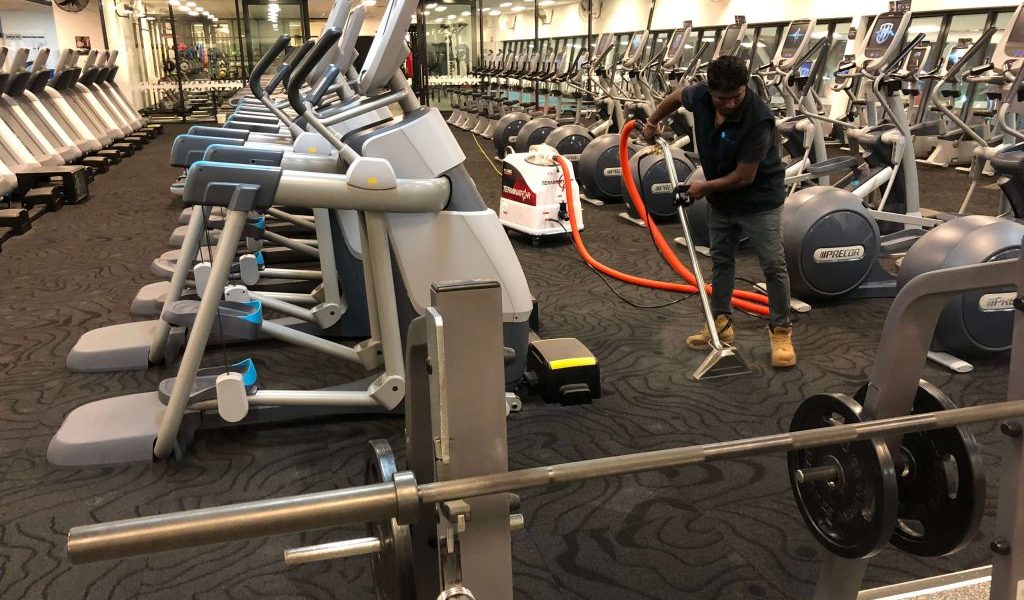
Shared fitness spaces across Perth see the same patterns as gyms everywhere, high foot traffic, warm training environments, and constant equipment rotation. For facility managers and cleaning teams working across suburban and CBD gyms alike, treating high-touch surfaces as a distinct category, separate from general floor and glass cleaning, is one of the most practical ways to keep a facility genuinely hygienic rather than just visibly tidy.
Frequently Asked Questions
What is the difference between a high-touch and low-touch surface in a gym?
A high-touch surface is handled repeatedly by different people in a short space of time, such as a machine handle or locker door. A low-touch surface, like a wall or ceiling, is touched rarely and carries much lower transmission risk, though it still needs regular cleaning for general hygiene and appearance.
Should members wipe down equipment even if staff clean regularly?
Yes. Staff cleaning covers scheduled and periodic disinfection, but member wiping after each use fills the gaps between those cleaning rounds, particularly during busy periods when equipment changes hands every few minutes.
Are some gym areas higher risk than others?
Areas with the most hand contact and moisture, such as weights areas, cardio consoles, locker rooms, and showers, generally carry higher risk than open floor space used for stretching or group classes.
How can a gym tell if its current cleaning schedule is enough?
A good starting point is auditing how often each high-touch zone is actually wiped during a typical trading day, then comparing that against how many people use it in the same period. If a popular piece of equipment sees dozens of users but only one clean per day, the schedule likely needs adjusting.