Gym Cleaning Products Explained: What Chemicals Are Safe and Effective for Fitness Equipment

Common Leads Form
Discover which gym cleaning products are safe for rubber flooring, vinyl padding, and metal equipment. A practical guide for Perth gym owners and facility managers.
Gym Cleaning Products Explained: What Chemicals Are Safe and Effective for Fitness Equipment
Keeping a gym clean is about more than appearances. The wrong cleaning product can degrade rubber flooring, crack vinyl padding, or corrode metal frames — sometimes within weeks of regular use. For gym owners and facility managers in Perth, choosing the right gym cleaning products means balancing effective sanitation with material compatibility, regulatory compliance, and the safety of members and staff.

This guide breaks down the main categories of cleaning agents used in fitness environments, explains which products work best on specific surfaces, and outlines how to evaluate commercially approved options for high-traffic spaces.


Understanding the Main Types of Gym Cleaning Agents

Not every cleaning product is designed for every surface or purpose. In a gym setting, you are typically dealing with sweat, skin oils, bacteria, fungi, and occasional mould — all in a warm, humid environment. The cleaning agents used to address these issues fall into a few broad categories.

Disinfectants

Disinfectants are chemical agents formulated to kill or inactivate microorganisms on surfaces. In gyms, they are most commonly applied to high-touch areas: equipment handles, weight benches, resistance machines, and communal mats.

Common active ingredients in gym disinfectants include:

  • Quaternary ammonium compounds (quats) — widely used in commercial fitness environments for their broad-spectrum effectiveness and relatively low toxicity at recommended dilutions
  • Hydrogen peroxide — effective against a broad range of pathogens and generally gentler on surfaces than bleach-based formulas
  • Alcohol-based solutions (ethanol or isopropanol) — fast-acting and useful for spot treatment, though they can dry out rubber and vinyl with repeated use
  • Sodium hypochlorite (bleach) — highly effective but can bleach, corrode, or degrade many gym surfaces; generally not recommended as a routine cleaner for equipment

In Australia, disinfectants intended for use in public or commercial settings should ideally be listed on the Therapeutic Goods Administration (TGA) register or meet the Australian Standard for disinfectants (AS/NZS 4187 or equivalent for surface use). This provides assurance that the product has been assessed for efficacy claims.

Degreasers

Degreasers target oils, grease, and body fats that accumulate on surfaces over time. In gyms, this matters most on metal weight plates, barbells, cable machine components, and any surfaces regularly contacted by bare skin.

Industrial or commercial-grade degreasers are typically alkaline-based, working by breaking down lipid molecules. When used on gym equipment, the key considerations are:

  • Whether the product is safe for the metal finish or coating on the equipment
  • Residue left behind after cleaning — some heavy-duty degreasers require thorough rinsing
  • Compatibility with surrounding rubber or vinyl surfaces if used near flooring or padding

Lighter, pH-neutral degreasers are often a safer choice for routine cleaning of gym equipment surfaces without risking long-term material damage.

Enzyme-Based Cleaners

Enzyme-based cleaners use biological enzymes to break down organic matter — sweat, proteins, and oils — at a molecular level. They are particularly effective at eliminating odours rather than just masking them, which makes them popular in locker rooms, changing areas, and on fabric-padded equipment.

These products tend to be gentler on surfaces than strong chemical disinfectants, making them a good choice for regular maintenance cleaning. However, enzyme cleaners are not disinfectants on their own — they do not reliably kill pathogens — so they are best used alongside, not instead of, an appropriate disinfectant where hygiene is critical.


Surface Compatibility: What Works and What to Avoid

One of the most common and costly mistakes in gym cleaning is using a product that is technically effective at killing germs but destructive to the equipment it is applied to. Perth’s climate — with warm temperatures and varying humidity — can accelerate material breakdown when the wrong chemicals are used regularly.

Rubber Flooring

Rubber flooring is standard in free weight areas and functional training spaces. It is resilient but sensitive to certain chemical families.

  • Avoid: Bleach-based products, high-concentration alcohol solutions, and strongly acidic or alkaline cleaners. These can cause rubber to dry out, crack, discolour, or lose grip over time.
  • Use instead: pH-neutral or mildly alkaline cleaners specifically labelled as safe for rubber surfaces. Diluted quaternary ammonium solutions are generally well tolerated, but always check manufacturer guidance for your specific flooring brand.
  • For daily maintenance, warm water and a rubber-compatible neutral detergent is often sufficient, with a periodic application of a suitable disinfectant.

Vinyl and PU-Padded Equipment

Vinyl upholstery on weight benches, seat pads, and back rests is a primary contact surface and needs regular disinfection. However, vinyl is susceptible to cracking and peeling if the surface is repeatedly exposed to harsh solvents or high-concentration alcohol.

  • Avoid: Undiluted alcohol wipes used constantly, bleach sprays, and any solvent-based cleaners. These strip away the plasticisers that keep vinyl flexible, leading to premature cracking.
  • Use instead: Quaternary ammonium-based wipes or sprays formulated for healthcare or fitness upholstery. These provide solid disinfection without compromising the vinyl’s integrity.
  • After cleaning, allow surfaces to dry naturally — avoiding buildup of residue — and consider periodic conditioning of vinyl surfaces as recommended by the equipment manufacturer.

Metal Equipment and Frames

Weight machines, barbells, dumbbells, and cable systems all involve metal components that can be susceptible to rust and corrosion if exposed to inappropriate chemicals or left wet after cleaning.

  • Avoid: Bleach solutions and highly acidic cleaners, which accelerate corrosion, particularly on chrome or zinc-plated finishes.
  • Use instead: A neutral or mildly alkaline cleaner or degreaser, wiped down and dried promptly. For chrome finishes, a microfibre cloth with a small amount of diluted disinfectant works well without scratching or corroding the surface.
  • Always dry metal surfaces after cleaning to prevent moisture from sitting and initiating rust, especially in areas with higher humidity such as near pools or in outdoor gym spaces common in Perth’s climate.

How to Select the Right Products for a Perth Gym Environment

Perth gyms — whether boutique studios, large commercial centres, or outdoor fitness spaces — operate in a specific regulatory and environmental context. Here is what to consider when reviewing or upgrading your cleaning product selection.

Look for TGA-Listed or Commercially Approved Products

In Australia, disinfectants that make therapeutic or efficacy claims are regulated by the Therapeutic Goods Administration. A product listed on the TGA Australian Register of Therapeutic Goods (ARTG) has been assessed for its claimed antimicrobial activity. For gym managers who need to demonstrate due diligence — particularly in the event of an outbreak or inspection — using TGA-listed disinfectants provides a defensible baseline.

Not every cleaning product requires TGA listing. General-purpose cleaners and degreasers that do not make specific antimicrobial claims fall outside TGA scope, but should still come from reputable commercial suppliers with Safety Data Sheets (SDS) available upon request.

Assess Product Safety for Staff and Members

Gym cleaning often happens between sessions or early in the morning — sometimes in poorly ventilated spaces. Products with strong fumes, high VOC content, or harsh skin irritants create a risk for the cleaning staff and for members who return to equipment before residue fully dries.

When evaluating gym cleaning products in Perth, consider:

  • Low-odour or fragrance-free formulations for enclosed spaces
  • Ready-to-use (RTU) formats versus concentrated products — concentrates reduce cost but require careful dilution training
  • Rinse requirements — no-rinse formulas reduce cleaning time and ensure staff compliance
  • Skin and eye irritation ratings on the product’s SDS

Match Products to Your Cleaning Schedule

A well-run gym typically operates on three cleaning tiers:

  1. Between-use wipe-down — members wiping equipment with disinfectant wipes or spray-and-wipe solutions; requires a fast-acting, surface-safe product
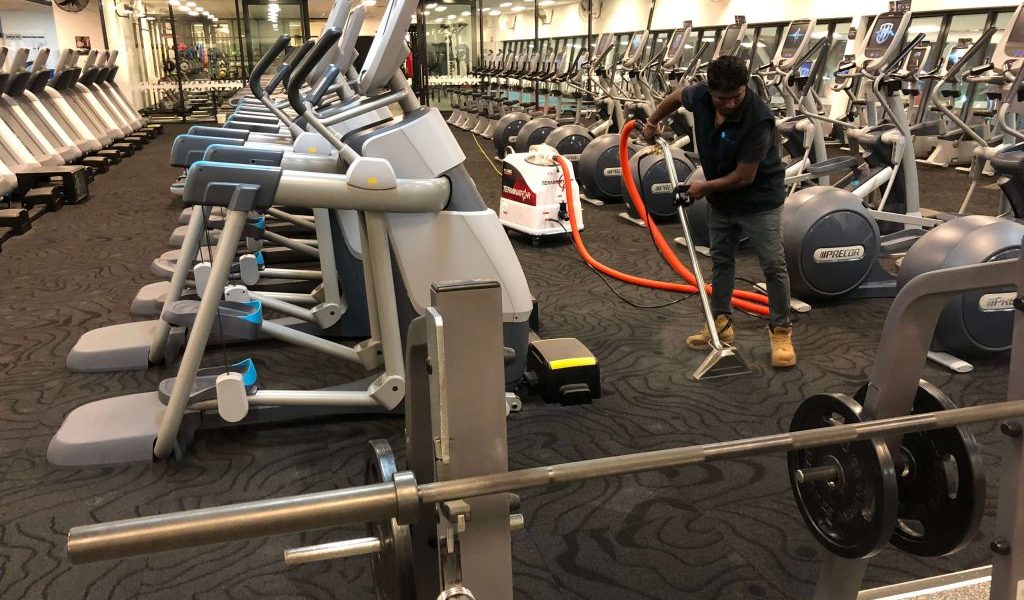
  2. Daily cleaning — staff cleaning all equipment, flooring, and high-touch points with appropriate disinfectants and detergents
  3. Periodic deep clean — thorough attention to flooring, mats, locker rooms, and any buildup areas, often using stronger degreasers or enzyme treatments

The products suited to each tier are not always the same. Using a heavy-duty degreaser for between-use wipe-downs is overkill and potentially harmful to surfaces; using a light spray for a monthly deep clean is insufficient.

Consider Environmental Impact

Perth has strict waste management and waterway protection requirements. Biodegradable cleaning formulas that break down safely in the water system are worth prioritising where they meet your hygiene requirements — particularly for drain-adjacent cleaning of shower areas, locker rooms, and outdoor equipment.


Frequently Asked Questions

Can I use household disinfectant sprays in a gym?

Household products are not formulated for the volume of use or the specific surfaces found in commercial gyms. They may also lack the regulatory backing needed for a commercial facility. Commercial gym cleaning products are designed for more demanding use and come with appropriate safety documentation.

How often should gym equipment be disinfected?

High-contact equipment such as benches, handles, and shared mats should ideally be wiped down between each user and given a thorough clean at least once daily by staff. Flooring and less-touched surfaces can be cleaned on a daily or scheduled basis depending on foot traffic.

Are fragrance-free products better for gyms?

In most cases, yes. Strong fragrances can cause reactions in members with sensitivities, and they can mask whether a surface is actually clean. Fragrance-free or low-odour products are generally more appropriate for shared fitness environments.

What does pH-neutral mean and why does it matter?

A pH-neutral cleaner sits at approximately pH 7, neither acidic nor alkaline. These products are less likely to degrade sensitive materials like rubber or vinyl over time, making them a safer choice for routine use on gym equipment surfaces.

Do I need a Safety Data Sheet for every product I use?

Yes. Under Australian workplace health and safety legislation, any hazardous chemical used in the workplace requires an SDS to be accessible to workers. Your cleaning product supplier should provide these as standard.


Selecting the right gym cleaning products in Perth is a practical decision that affects the longevity of your equipment, the safety of your members, and your compliance with commercial hygiene standards. By understanding the different chemical categories, matching products to surfaces, and choosing options with appropriate regulatory credentials, you can maintain a consistently clean gym without unknowingly causing damage that costs far more to repair than it would have to prevent.

Share:

More Posts

Send Us A Message

Common Leads Form
Live

September 6, 2026 9:12 am

Get A Quote